Tiny Fossils Reveal Secrets of Complex Life's Origin
While the hunt for life on Mars or distant icy moons often grabs headlines, a profound mystery about the emergence of complex life is unfolding much closer to home. Scientists are diligently working to pinpoint when the first eukaryotes appeared on Earth and how these pivotal organisms paved the way for the intricate life forms we see today.
This quest is crucial because simple microbial life dominated our planet for approximately 90% of its history. Understanding the transition from a microbial-exclusive world to one teeming with plants, animals, and fungi could also illuminate the potential for complex life to arise elsewhere in the universe.
From Microbes to Complexity
Life on Earth originated over 3.5 billion years ago. By at least 2.3 billion years ago, cyanobacteria and oxygen-producing photosynthesis were present, and eukaryotes had emerged by at least 1.7 billion years ago. Algae appeared around a billion years ago, possibly earlier, and animals emerged at least 570 million years ago.
The common ancestor of plants and animals dates back to around 1.6 billion years ago. Early eukaryotic forms, known as crown eukaryotes, played a vital role in the development of complex life, representing what scientists consider Earth's first complex organisms.
What Distinguishes Eukaryotes?
Eukaryotic cells are characterized by a nucleus containing their DNA and specialized internal structures called organelles. Mitochondria, for instance, provide the energy necessary for more demanding life functions. Ultimately, eukaryotes gave rise to complex multicellular organisms and the visible life forms we know today, including all animals, plants, and fungi.
Locating their earliest ancestors, however, is exceptionally challenging. Organisms older than 500 million years lacked shells or skeletons, meaning paleontologists must rely on rare geological conditions capable of preserving delicate cells and soft tissues. This leaves scientists with limited insights into life's evolution over vast stretches of Earth's history.
Investigating the Transition to Multicellularity
Research is focusing on the monumental shift from a bacterium-dominated planet to one inhabited by complex multicellular organisms. Due to the scarcity of early multicellular fossils, scientists analyze the chemistry of ancient rocks to identify potential preservation sites.
The immense passage of time also presents a significant hurdle. Eukaryotic microfossils have undergone billions of years of geological alteration, making these minuscule remains even harder to detect. It is known that the transition to multicellularity occurred multiple times in different locations, with a particular interest in how this process led to the astonishing diversity of modern animals.
Much of the foundation for current animal diversity was laid during the Ediacaran/Cambrian transition around 540 million years ago. This period saw a significant evolutionary leap from predominantly soft-bodied organisms to the Cambrian explosion, marked by the rise of more mobile animals with shells and skeletons.
Where to Find Ancient Microfossils
Discovering fossils from these early periods necessitates searching in environments where delicate biological material had an unusual chance of survival. Researchers are particularly drawn to regions like Svalbard, Norway, and Australia, which has yielded some of the oldest known eukaryotic microfossils dating back approximately 1.75 billion years.
Ancient coastal environments are prime locations, offering abundant nutrients and organic material conducive to greater diversity and the development of multicellularity. Pristine or underexplored regions, especially those with large clay deposits that can preserve ancient remains, are often targeted. Deserts and Arctic landscapes, with exposed ancient rocks due to minimal vegetation, are also ideal for this work.
The Difficulty of the Fossil Hunt
Even in optimal locations, finding eukaryotic microfossils is a formidable task. These organisms were microscopic, lacked protective hard tissues, and have been subjected to billions of years of geological degradation. Furthermore, the fossil record from this period remains poorly sampled.
Despite these challenges, progress is being made. Scientists are improving their ability to identify rock types most likely to contain early fossils, providing crucial evidence for reconstructing Earth's earliest life history.
Earth's Earliest Life and the Search for Alien Life
This research has profound implications beyond understanding Earth's past. Studies involving clay deposits, for instance, were initially driven by the search for extraterrestrial life. By understanding how ancient organisms are preserved on Earth, scientists can enhance their ability to detect potential signs of life elsewhere.
Grasping the origins and evolution of complexity on our own planet is therefore a cornerstone of astrobiology. To accurately assess the likelihood of life arising and evolving elsewhere, a clearer understanding of its terrestrial journey is essential.
Fresh materials — Science news

GLP-1 Medications in Children Linked to Nutritional Deficiencies
Children prescribed GLP-1 medications for weight loss, prediabetes, or type 2 diabetes may face a significant nutritional risk. A study published in Childhood Obesity identified that almost 17% of young patients (16.8%) were diagnosed with a nutritional deficiency within their first year of tr

Dietary Changes May Reverse Biological Age in Older Adults Within 4 Weeks
Significant shifts in biological age markers are achievable for older adults in a remarkably short period, driven solely by dietary modifications. New findings from the University of Sydney indicate that Australians aged 65 to 75 who reduced either dietary fat or animal-based protein displayed
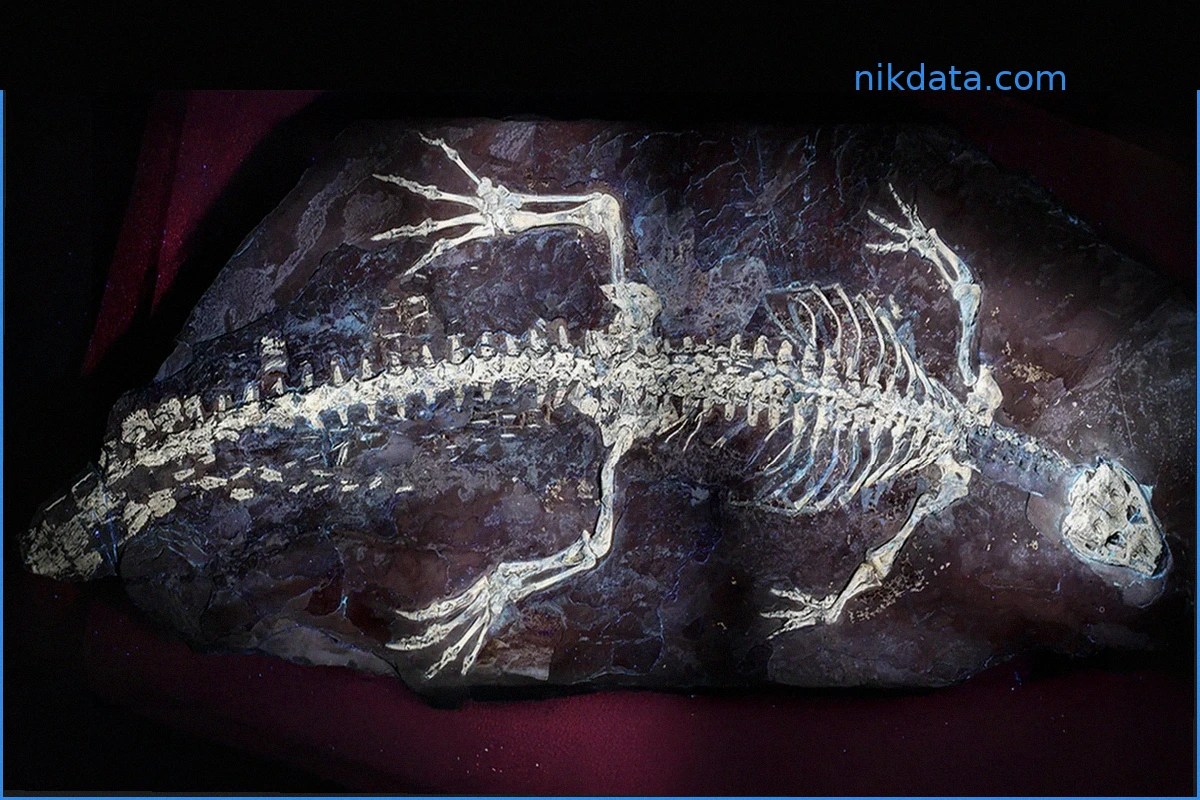
UV Light Reveals Possible Camouflage on 125-Million-Year-Old Crocodile Fossil
A remarkably preserved fossil from northeastern Spain offers a rare glimpse into the skin, soft tissues, and potential coloration of an ancient crocodile relative that lived approximately 125 million years ago. This new research, detailed in the Zoological Journal of the Linnean Society,
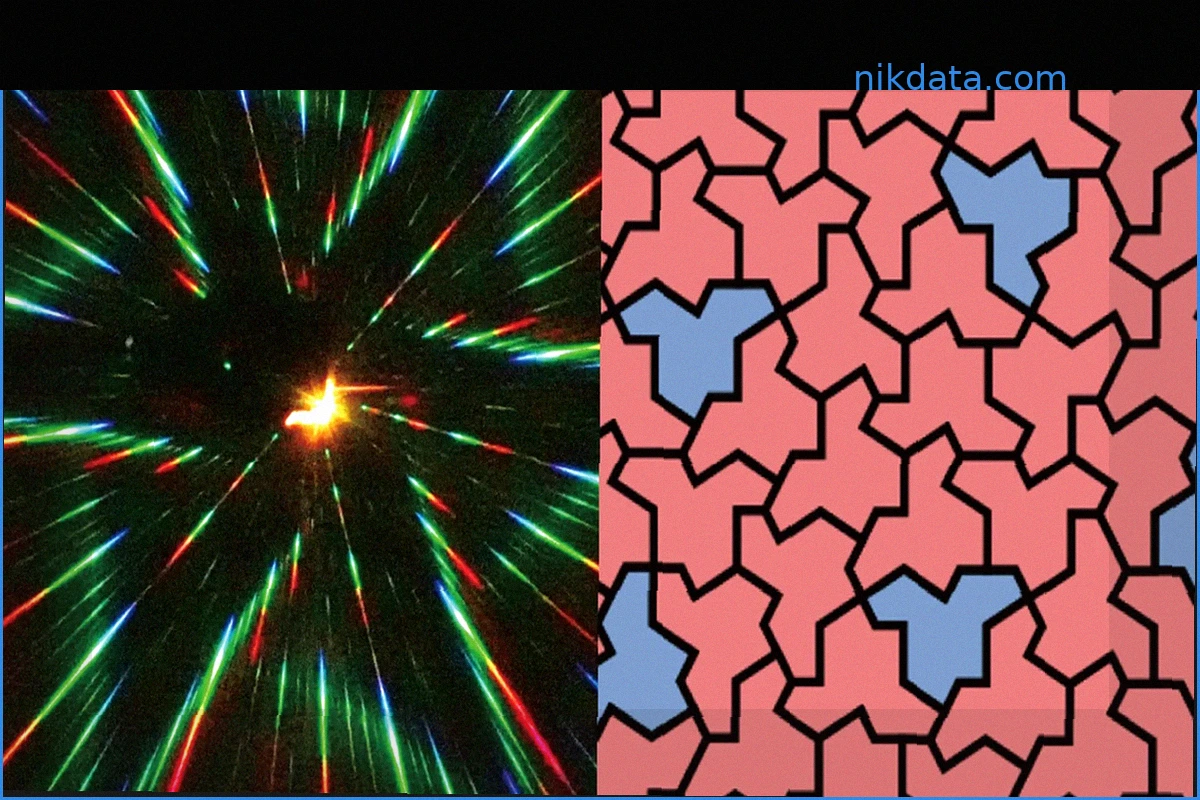
The Einstein Problem's Shape Reveals New Physics Through Light Patterns
A mathematical shape, famous for solving a decades-old puzzle, is now showing an unexpected link to physics. Structures based on this shape can make light form unusual chiral patterns, opening new avenues for studying how geometry affects optical behavior. Researchers from the Institute of

Screen Time's Unexpected Link to Kids' Cognitive Skills
A Finnish study has uncovered an unexpected correlation between screen usage and cognitive capabilities. Children who spent more time in front of screens as they grew tended to exhibit enhanced cognitive processing during their adolescent years. One of the lead researchers advises agai

Einstein's Cosmic Blunder: The Cosmological Constant and Dark Energy
More than a century ago, Albert Einstein shifted his focus from gravity to the universe's destiny. In 1917, shortly after formulating his general theory of relativity, he began applying its equations to cosmology, seeking to understand the universe on its grandest scales. Gravity was the natura